The ICCSC remains steadfast in its commitment to practical policy advocacy alongside key ministries and agencies. Our focus is clear: supporting energy transition governance, aligning with national energy policies, and accelerating permitting processes. Our ultimate objective is to eliminate uncertainty, unlock investable structures, and ensure that project execution is both credible and scalable..
BELLADONNA TROXYLON MAULIANDA Executive Director of ICCSC ***
To scale CCS, we must focus on delivery readiness. This means clearer end to end permitting, stronger MRV credibility and environmental safeguards, transport and storage preparedness, and financing structures that match project realities. ICCSC will continue to work with ministries and agencies to support permit acceleration, cross border environmental permitting, and carbon credit activation. We will also support industry roadmaps for CCU and CCUS and the policy instruments needed to move from pilots to scalable deployment….
JUNAEDI Chairman of The 4th International and Indonesia CCS Forum 2026 ***
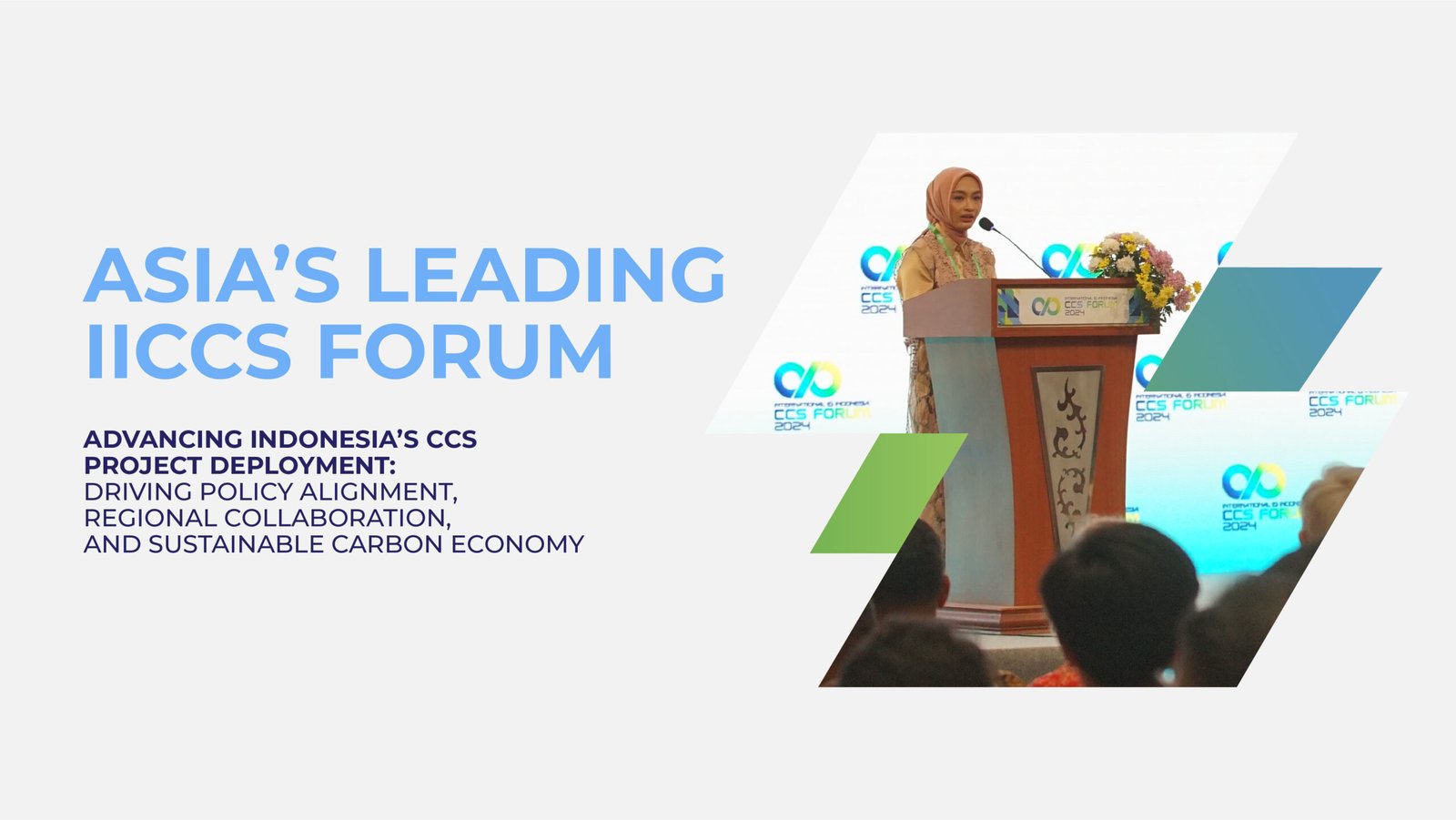
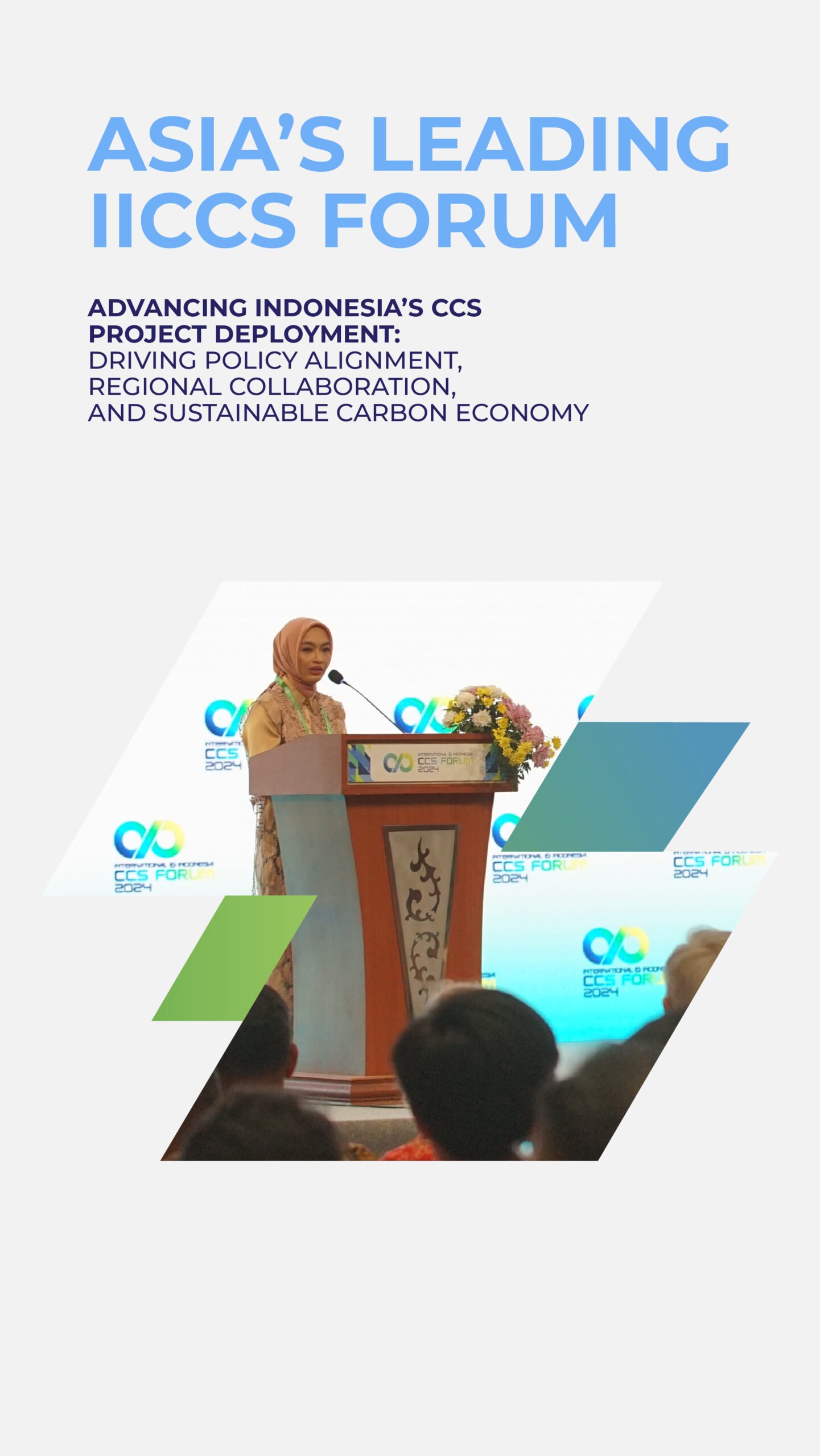
…As Indonesia advances its decarbonization agenda, Carbon Capture and Storage (CCS) has moved decisively from policy intent toward active project deployment. Guided by the theme “Advancing Indonesia’s CCS Project Deployment: Driving Policy Alignment, Regional Collaboration, and a Sustainable Carbon Economy,” this forum represents a critical inflection point—where ambition is translated into investment, execution, and commercial opportunity.
Special Envoy for Energy and Environment of the Republic of Indonesia
Hon. Bahlil Lahadalia*
Minister of Energy and Mineral Resources of the Republic of Indonesia
Hon. Airlangga Hartarto*
Coordinating Minister for Economic Affairs of The Republic of Indonesia
Hon. Eddy Soeparno*
Deputy Speaker of People’s Consultative Assembly of the Republic of Indonesia
PLENARY SESSION 1
From Policy Foundation to Implementation: Governing CCS for Decarbonization Strategy
This session will explore how CCS governance moves from policy foundations to effective execution, focusing on regulatory alignment and implementation mechanisms that enable investment-ready deployment and support Indonesia’s sustainable carbon economy.
Elen Setiadi*
Deputy Minister for Energy and Mineral Resources, Coordinating Ministry of Economic Affairs of the Republic of Indonesia
Laode Sulaeman
Director General of Oil & Gas, Ministry of Energy & Mineral Resources of the Republic of Indonesia
Wakuda Hajime*
Director-General, Natural Resources and Fuel Department, Ministry of Economy, Trade, and Industry (METI), Japan
Keith Tan*
Deputy Secretary of the Ministry of Trade and Industry (MTI), Singapore
PLENARY SESSION 2
Building Regional CCS Landscape Across the Border: Strategic Priorities for Connectivity and Scale
This session will explore how cross-border collaboration and G2G agreements can enable the development of regional CCS hubs, with a focus on integrated transport and storage infrastructure. It will also examine Indonesia’s strategic role as a CCS anchor in driving Asia-Pacific connectivity, investment flows, and large-scale deployment.
Djoko Siswanto*
Head of SKK Migas
Craig Stewart
Sr. VP International E&P and CCS, Medco Energi
Dannif Danusaputro
Director of Investment and Business Development, PT Pertamina Hulu Energi (PHE)
Egon van der Hoeven*
President, ExxonMobil Asia Pacific Pte. Ltd., ExxonMobil Low Carbon Solutions
Kathy Wu*
Regional President, Asia Pacific, bp
PLENARY SESSION 3
Scaling Asia Industrial Decarbonization: CCS for Shaping the Future of Clean Industry
This session will discuss how CCS technologies can evolve from early deployment to scalable, cost- efficient systems by drawing lessons from initial projects, improving operational performance, and unlocking economies of scale.
Ary Sudijanto*
Deputy for Climate Change Control and Carbon Economic Value Governance, Ministry of Environment of the Republic of Indonesia
Shinchi Kikuko
Chief Research Manager in the Green Transformation Division, Mitsubishi Research Institute
PLENARY SESSION 4
Mobilizing Capital for CCS Investment: Momentum to Drive Asia’s Carbon Economy Growth
This session will examine how capital can be mobilized for CCS by aligning policy frameworks, risk allocation, and financing structures. It will explore the role of public–private finance, fiscal incentives, carbon markets, and risk-sharing mechanisms in supporting bankability and enabling clear pathways to final investment decisions (FID).
Dr. Ir. Nani Hendiarti, M.Sc.*
Deputy for Coordination of Affordability and Food Security, Coordinating Ministry for Food Affairs of the Republic of Indonesia
Ryuta Kitamura
Director General, CCS Project Department, JOGMEC
CONCURRENT SESSION 1
From Awareness to Acceptance: Building Public Trust and CCS-Ready Ecosystem
This session will explore how to move from awareness to acceptance by building public trust and CCS-ready ecosystem. It will examine strategies for public engagement, CSR initiatives, and community involvement, alongside approaches to skills development, certification, and human capital strengthening needed to secure long-term social license and support sustainable CCS deployment.
Christopher Len
Senior Fellow and Acting Coordinator, Yushof Ishak Institute
CONCURRENT SESSION 2
De-Risking CCS Investments: Legal Frameworks, Standards, and Project Assurance
This session will focus on translating CCS policies into practical project execution by de-risking development through clear permitting and regulatory pathways. It will examine key issues including AMDAL processes, CO₂ transport and storage permits, KBLI alignment, liability and long-term stewardship, as well as MRV frameworks and environmental safeguards.
Ho Seob Lee*
Director General, Korea CCUS Association
Jan Theulen
Director CCUS Business Development & Partnerships, Heidelberg Materials
Marion Becker
Associate Director - Natural Resources, Asia, AON
CONCURRENT SESSION 3
Advancing CCS from Concept to Reality: Technology, Infrastructure, and Project Design
This session will examine how CCS projects move from concept to execution by aligning technology choices, transport and storage infrastructure, and integrated project design. It will examine capture technology readiness, hub-based infrastructure planning, storage characterization, and phased development strategies with a focus on constructability, cost optimization, and delivery risks across the value chain
CONCURRENT SESSION 4
Unlocking CCS Markets: Business Models, Incentives, and Carbon Value Creation
This session will explore how CCS markets can be unlocked through viable business models, targeted incentives, and carbon value creation. It will examine benchmarks, CCUS applications, carbon credit mechanisms, BECCS, and other market-based approaches that can improve project economics and accelerate deployment.
Meizani Irmadhiany*
Head of Secretariat of the Implementation Team for Carbon Economic Value Instruments and Greenhouse Gas Emission Control